

The Antidote to the Algorithm is Aliveness
You're not data to optimize, you're matter that matters

The sound of tattoo needles rhythmically talismanning skin hums in the background while Ozzy Osbourne sings “I’m going backward but I’m in control.”
It’s 4:09pm on a rainy Tuesday afternoon and despite the raw sounds of Ozzy, I just had my first pumpkin spice latte of the year (technically it was a cappuccino with artisanal pumpkin spice cold foam and syrup, but not even bougie gourmet coffee can shake the basic out of a pumpkin-based beverage).
In some alternative universe, we aren’t living in a Neptune haze of Hieronymus Bosch news headlines. The walls are caving in on a dying and decaying republic while we mindlessly “add to cart” and turn to our favorite comfort show to numb the pain.
The body is present throughout the chaos, reminding us that the here and now is still happening. Dystopia is a thing but so is laundry, the need to take your vitamins, the reminder to move and flush out the system.
Lately, it feels like my body is falling apart, or maybe it’s just tired of the relentless pressure I’ve put it under. Years of self-analysis have given way to my cells calling out for a break, a sabbatical from self-help and the constant scanning for ways to improve.
Not even pets are safe. My cat is diabetic, partly because he’s a chaauuunky boy, but also because of the prescription urinary food he’s on, which fills his body with a heady cocktail of ground fish parts and carbs. Behind the scenes of Instagram likes and fashion TikToks, the body still responds to inputs and outputs.
We’re all just tired, aren’t we?
Comically, Ozzy now sings, “Tell me people, am I going insane?” Yup. Definitely.
Perhaps life felt easier when there weren’t as many screens or as much information. Everything in the right dosage can kill you, even the things we believe are good for us. Self-help, YouTube videos, all of it becomes a weapon if you sharpen it enough against the never-ending to-do list of modern life and expectations.
We live under surveillance in this day and age; we know the devices are listening to us, the algorithm feeding consumerism and insecurities. Do we stop to recall that our bodies are also listening to us? To the barrage of shoulds and the way we pile on productivity and optimization like it’s normal, expecting that when we achieve all we want or finally get disciplined, life will somehow morph into a manageable, calm existence. In this economy?
The algorithm online has crossed over for many of us and become an internal algorithm. We no longer live life by the sun, but by the 6x4 inch rectangular device attached to our hands. Circadian rhythms replaced by digital efficiency.
The algorithm that drives us to consume content is interwoven with capitalism. We live in a capitalist society that thrives on performance, profit, and constant improvement. The algorithm is its most competent enforcer, turning us into products that must optimize, upgrade, and climb forever upward.
Rarely do we stop to listen to our bodies or minds, because we’ve been wired to criticize and compare. Nature doesn’t demand this kind of upward trajectory. The sky doesn’t optimize for perpetual sunshine; it rains. The tides rise and fall. But we’ve been convinced that to be human is to be a chart line moving up and to the right.
We consume instead of create. We distract ourselves instead of listening.
It’s not really our fault. In a world that prizes capitalistic growth and preys on our insecurities, is it any wonder we look for love in all the wrong places? We’re not corporations, we’re not markets, we’re messy, real humans.
Capitalism thrives on neat categories. Algorithms depend on them. But what happens when identity refuses to fit?
Ru Paul wisely observed: “The matrix says, ‘Pick an identity and stick with it. Because I want to sell you some beer and shampoo and I need you to stick with what you are so I’ll know how to market it to you.’ Drag is the opposite. Drag says, ‘Identity is a joke.’”
Identity is a joke. Constant upward improvement is a joke. We are cyclical in nature, complex, multifaceted humans. We’ve just been talked into a coma for so long we’ve forgotten it. The categories that algorithms and markets depend on aren’t natural. They’re killing our aliveness.

What is the antidote to the algorithm?
Many will say authenticity, and certainly Dr. Gabor Maté is onto something when he says that living in a lack of authenticity creates sickness in the body: “If you don’t know how to say no, your body will say it for you through physical illnesses.”
But authenticity is only part of the equation. Before you can get to authenticity, you have to wake up and reconnect to yourself. The antidote to the algorithm is ALIVENESS.
Aliveness means connecting with your five senses. Going offline without the anxiety or the fear that you’re missing out. Without the need for validation or the dopamine hit that comes from a 10-second video clip.
Aliveness means noticing what’s happening in your body, in your life. Noting the boredom, the emptiness you feel when you’re not glued to a screen or in a false state of needing to improve yourself.
Aliveness is Ozzy screaming lyrics (enunciation optional).
Aliveness is the smell of spinach and cheese empanadas heating on a griddle.
Aliveness is making something imperfect just because it’s fun.
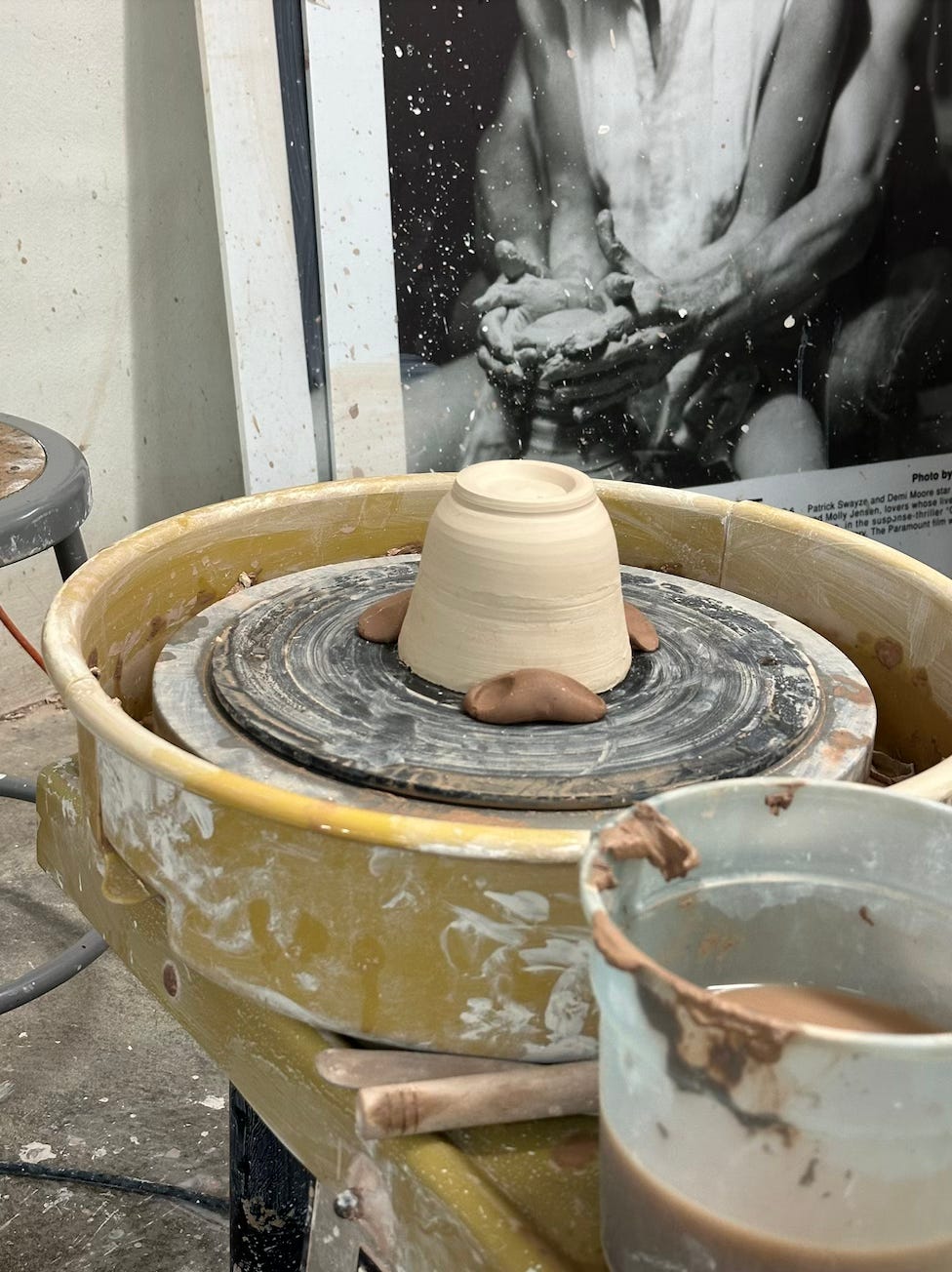
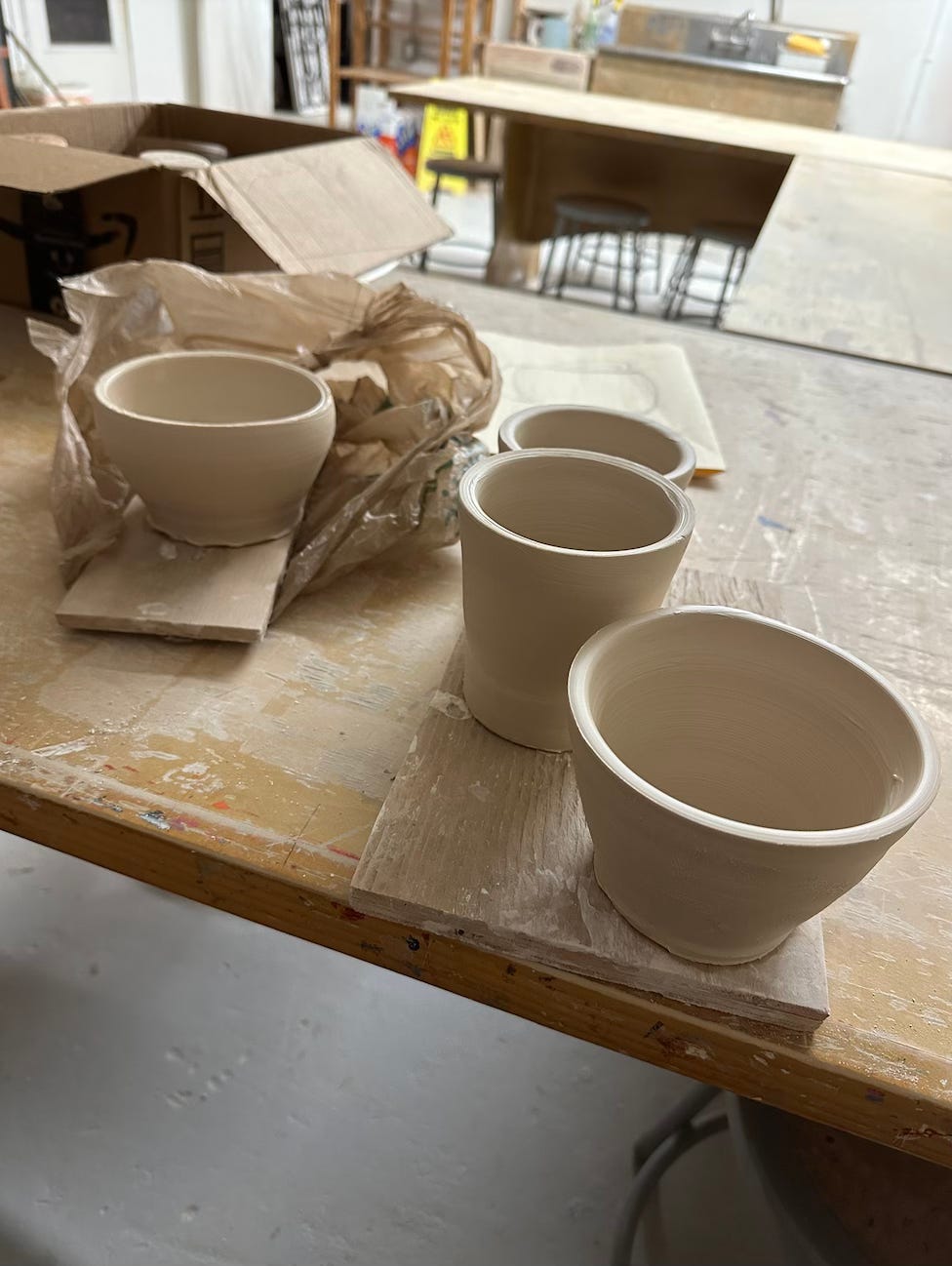
I’ve been taking a pottery class. Pottery is a humbling hobby. You quickly learn that to create anything remotely bowl-like, you have to be aware of your body: how you’re sitting, where your elbows are, how hard your hands press into the clay, how fast to pull up compared to the spinning of the wheel. All these micro-movements are connected, and you have to simply flow.
One of the students in my class has an engineering background. He asked the instructor if we needed to measure or get exact while we threw pots. My instructor said, “Yeah, that’s not pottery. We go by feel. It’s an intuitive medium.”
Mud might obey the centrifugal force of the wheel and your hands, but not much else. Aren’t we made of mud too?
We feel lost and unmoored because we’ve given up connection for performance. We’ve tried to replace our cyclical natures with unnatural demands for better and more. Better and more deny us our human natures and disconnect us from the beauty, wonder, and awe that is our birthright to experience.
There is never enough with capitalism. A good quarter must be followed by a better one. A good year is only good if it beats last year.
But we’re not some mark on a chart or a category in an algorithm, we’re mud, we’re cycles, we’re organic matter. And that matters.
Maybe the work is simply in noticing these unnatural pressures, the voice in our head that says we’re not enough, letting it be there but not scrambling to fix it. Maybe the work is in accepting things as they are and letting the wisdom of the body speak.
Instead of looking at life through a lens of productivity and output, deciding it matters more how much you can feel into this moment, how much you can just be.
Needed to read this today. Thank you.